Hey hey @3dtechs , I’ll be in the space using one of the X1 Carbons tonight. When I was last in there were talks of trying to get the resin printer back in working order. If anyone is around tonight, I’d be happy to take a look at it. I have lots of experience using and fixing most MSLA printers. I think I saw somewhere that it’s a Proton? Regardless, happy to have a chat and talk about making resin printing available at the space again.
My understanding is that the issue isn’t the printer, it’s safety - the printer works fine but there isnt an adequate setup to deal with the resin.
Lia and I were trying to figure out what would be necessary a few months ago. We started probing a design for a fume hood with downdraft extraction + spill tray, but the project fell by the wayside because I was too busy.
@3dtechs can give more detail about the plan, but I believe it’s to have an enclosure around the printer similar to the new CNC machine. I’m helping with the electronics. The idea is to design 2 custom PCBs that can be used both for tool control and also fume hood control (e.g. door sensor and fan relay).
This design is currently in the early stages of being costed out but I hope it will be useful for multiple areas that need new tool controls.
Yes it’s about safety and 3dtechs are barely keeping up fixing the bashings the printers take. E.g. 2 weeks ago Johanness had a Z axis bearing knocked out
Fume hoods/cabinets, DIY and COTS, are being considered.
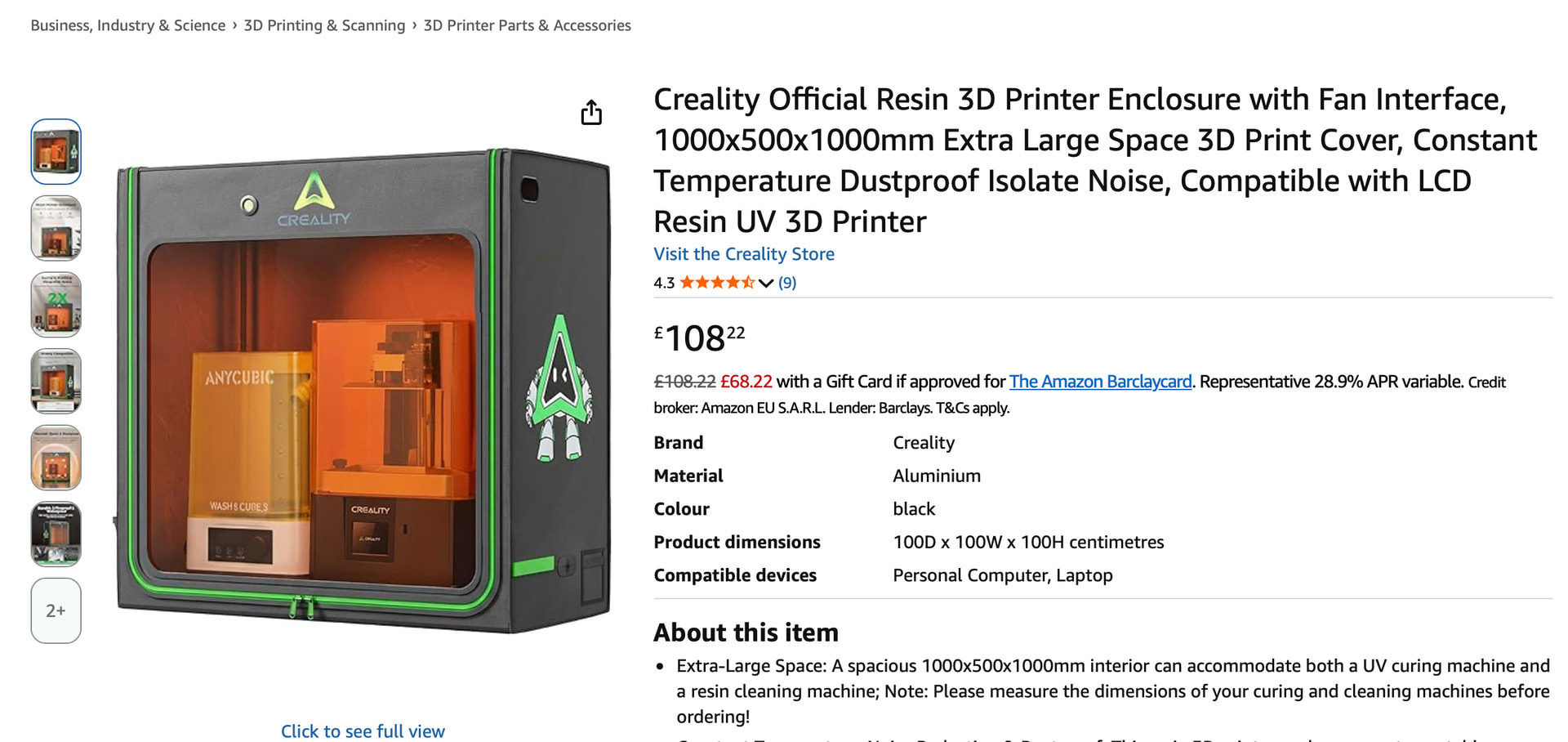
I wouldnt trust that enclosure, it looks way too small and it’s flimsy canvas with zips.
In my opinion we need a pretty robust solution. I would expect a proper fume hood, dead switches when the door is open, non-porous counter surface fully enclosed in the negative pressure zone, etc.
Resin is a risk to people other than the user, and people are in that room for hours observing filament prints and working on textiles. I don’t think we should work with it in the space unless we can guarantee essentially zero risk of second-hand exposure.
@FunkyGroover I agree that in a perfect scenario that what you’re suggesting would be ideal. But its a little overkill. Most resin 3d printers contain fumes within the print chamber and have some form of internal venting. Even a canvas enclosure, granted it’s well made, should do the trick of capturing any escaping fumes. I worked in a space with 4 resin printers running simultaneously and we got away with some carbon air purifiers and good PPE. As long as we have respirators and gloves in the space for use (which will be a different challenge to figure out) then we should be ok. Again, granted that people in the space aren’t opening and closing the enclosure all the time, it should be good to run while other people are working on textiles and filament prints. We could look at getting something like this to hook up to it. Or I would suggest getting this for the general area.
The real chances for contamination and fumes are going to come when changing the resin, cleaning the tank, or any activity that has the uncured resin exposed to open air for long periods of time. I agree we need a solution to that, and a workflow around how and where it’s going to happen. @Geraetefreund you bring up an excellent point about IPA waste. We would need a dedicated receptacle for that. I would suggest we try to cure the waste for a minimum of 30 mins with 405nm UV. We could make a resin “kill box” if you will. Essentially just a box we can place the wash tank full of contaminated fluid in, surrounded by uv light, that we can close the door to and cure the hell out of the waste fluid. Once blasted with UV, we’d need a dedicated bucket and strainer to separate the cured debris and waste fluid. The waste fluid can then be reused for washing.
All of that is going to require a dedicated work area. From what I saw last night in the 3d printing room, it looks like a venting solution was being made at some point, but the vent pipes are not fully connected yet. That little table would be ideal for housing the resin printer and cure/wash station, but not good for actually working with resin. @FunkyGroover I totally agree we need some non-porous mats for the work surface, and it would be ideal if we could just wall off that part of the room completely but I don’t think that’s possible given the size and spot.
All this to say, I would love to have a sit down meeting or online call to talk through this all with you lovely people. I think it’s possible, it’s just going to take a village and some major thinking. Looking forward to it!
I can confirm it works and that its robust enough using a canvas enclosure as long as people using it are responsible. We have a resin printer at our Kent makerspace, we use such a settup to keep both UV out and fumes venting out.
The reason canvas enclosures work is because they create a negative pressure that means the leaks are the clean air source into the chamber rather than the way fume escapes, and all the air is pulled through to a series of filters.
The question is whether you trust recirculating filters to handle enough of the fume to keep you below the workplace exposure limits (WELs) for EH40 listed compounds and if there are non-listed things to be worried about (like UFPs in 3D printers which are hotly debated and not specifically listed).