3-Axis Vertical Milling Machine – Gate PBM 2-VS-L
Details
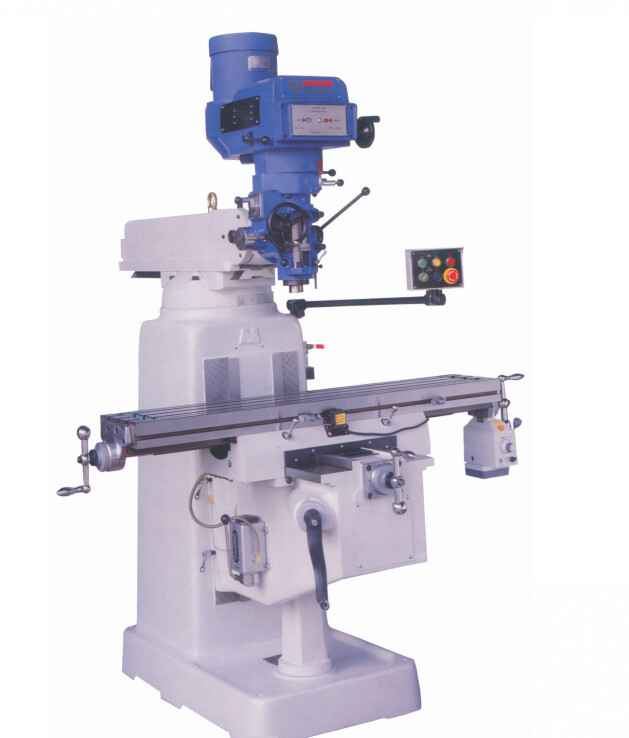
This is a manual 3-axis turret milling machine with an R8 spindle. Unlike small hobby mills, this is an industrial-grade machine designed to handle larger workpieces and heavier cuts with much greater precision. It can be used for shaping and machining metals, plastics, and other rigid materials by moving a rotating cutting tool (the mill) against the workpiece.
The Gate PBM 2-VS-L was chosen because it strikes a balance between size, capability, and accessibility for our space. It offers a wide range of spindle speeds, over a metre of table travel, and compatibility with both imperial R8 collets and metric ER collets. This makes it versatile enough for most workshop projects — from small precision parts to larger fabrications.
NOTE
The mill has now been commissioned and is ready for member use following induction.
Condition Notes
Second hand, but in solid working condition. This type of mill was originally intended for professional workshops and toolrooms, so it is built to last with proper care and maintenance.
Table Travel
X axis: approx. 1,070 mm
Y axis: approx. 420 mm
Z axis (knee travel): approx. 420 mm
Throat: approx. 700 mm
Capacity
End milling capacity: 28 mm (with suitable collet and tool)
Face milling capacity: 76 mm
Spindle taper: R8
Speed range: variable, 70–4200 rpm
Accessories Available
- R8 imperial collet set (1/8" to 7/8")
- R8 to ER32 collet holder (with a wide range of metric collets)
- R8 to ER40 collet holder (with a wide range of metric collets)
This setup means we can accommodate most common tooling, both metric and imperial, making it easy for members to bring in their own cutters if needed.
Why Milling?
For members new to machining: a milling machine complements our existing metalworking tools by allowing us to produce accurate slots, pockets, flat surfaces, and complex shapes that would be very difficult to achieve by hand or on the lathe alone. It opens up the possibility for projects in engineering, robotics, fabrication, and custom tooling.
Induction and Training
Induction is required before using the mill. The induction covers:
- Workholding (vice, clamps, fixtures)
- Tooling and collets
- Safe use of the handwheels and all three axes
- Speed and feed settings
- Cleaning and maintenance responsibilities
Maintainers
@metaltechs
Risk Assessment
Vertical Milling Machine Risk Assessment
Before Use
- Ensure the machine is clean (use a brush, not rags, to clear the table).
- Check that all three axes move smoothly.
- Inspect collets, clamps, and cutters. Report issues to @metaltechs.
- Always wear protective goggles. Do not wear gloves while operating the mill.
During Use
- Make sure the workpiece is securely fixed in the vice or with clamps.
- Wear PPE at all times — hot, sharp chips are thrown during cutting.
- Take shallow passes rather than forcing the cutter.
- Be aware of backlash in the handwheels when moving the table.
After Use
- Return collets, cutters, and accessories to their storage.
- Brush down the table and clear chips from the T-slots.
- Lightly oil the table and spindle nose (e.g. WD40) to prevent rust.
- Leave the machine tidy and ready for the next member.
Maintenance
Regular maintenance includes cleaning, lubricating slides, and checking drive belts and electrics. Manual
Phoebus PBM-2VS & 4VS (2) (2).pdf (6.9 MB)