http://makezine.com/2013/01/31/make-your-own-cnc-wire-bender/
You could put a something similar to a sowing mechanism on the bender to stich the cable on as it exists to bender
http://makezine.com/2013/01/31/make-your-own-cnc-wire-bender/
You could put a something similar to a sowing mechanism on the bender to stich the cable on as it exists to bender
Or run it into this stuff
Popped-out of the supporting surface you mean? It would occlude too much of the el-wire when viewed obliquely. I want an unbroken line. Transparency is key 
Make the supporting structure transparent then!
Ah but that would diffuse the light!
The effect has to be bright light on a matte black surface or it’ll lose definition.
Could be a goer. Worth experimenting with at least!
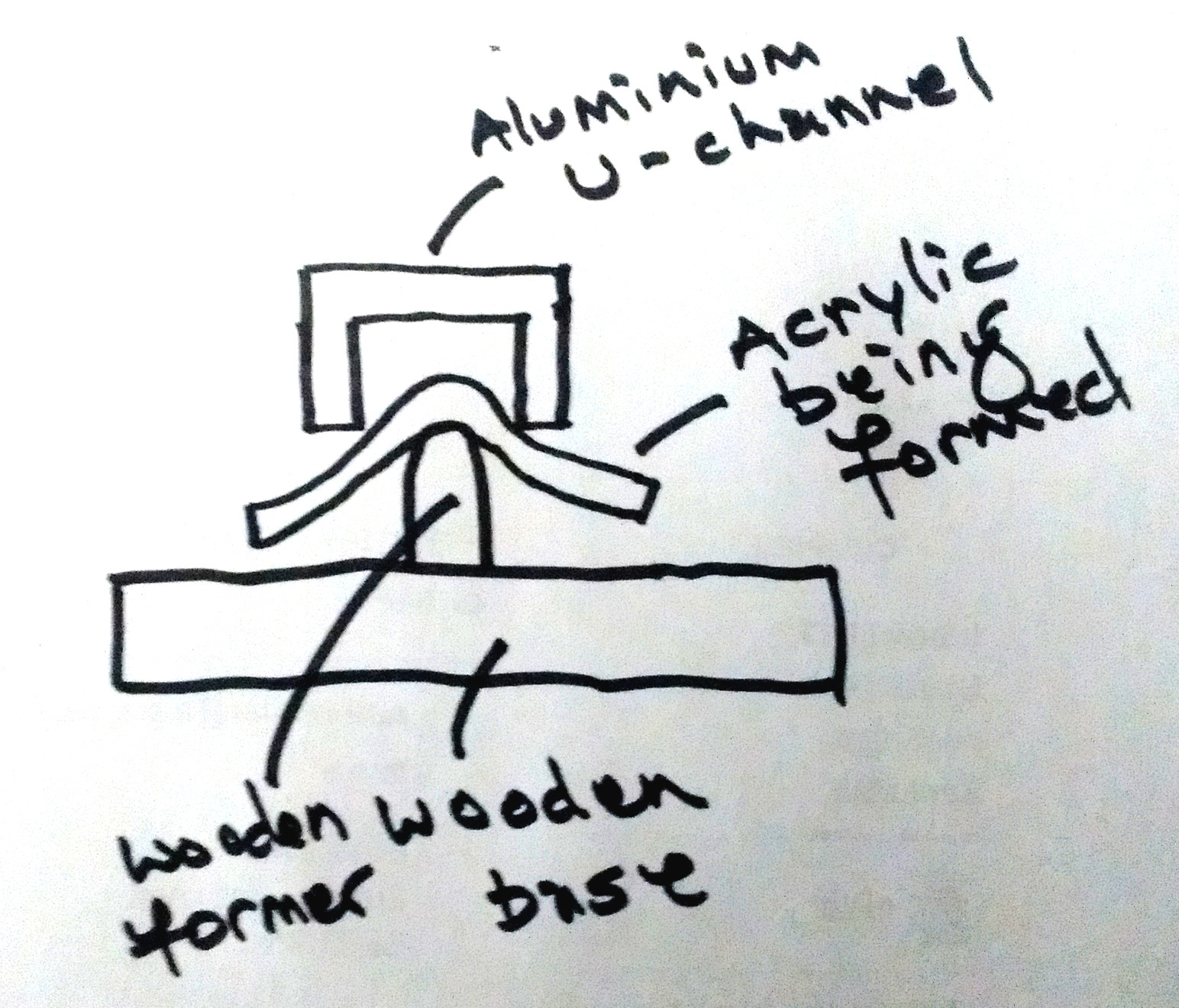
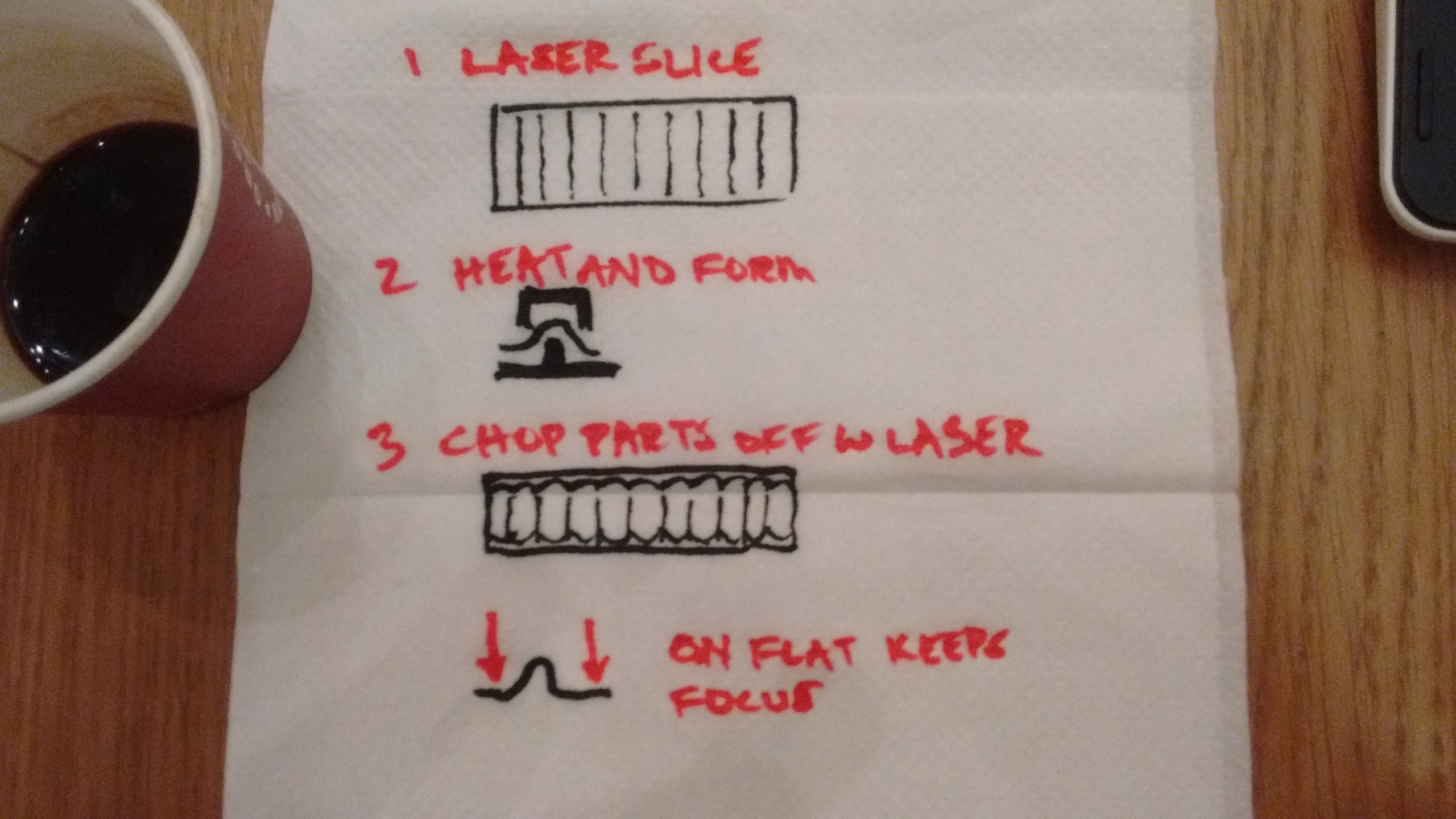
How about heat form acrylic into a long piece with the right profile, then laser cut individual bits off. Could make little holes too before cutting off.
Just a thought.
J.
PS love the masks!
Acrylic is far too brittle, but this might work with polyprop. Difficulty would be maintaining laser focus when cutting both high and low sections.
Based on the used case this is what I will do.
You’ll need a heat gun, empty plastic bottle, maybe wood dowel to make the form and other scrap of wood.
And voila
I think that will be the easiest way to produce those at low cost and with minimal tools. I hope that help
ps: after further reading the thread this is pretty much the same idea as @jonathanjo
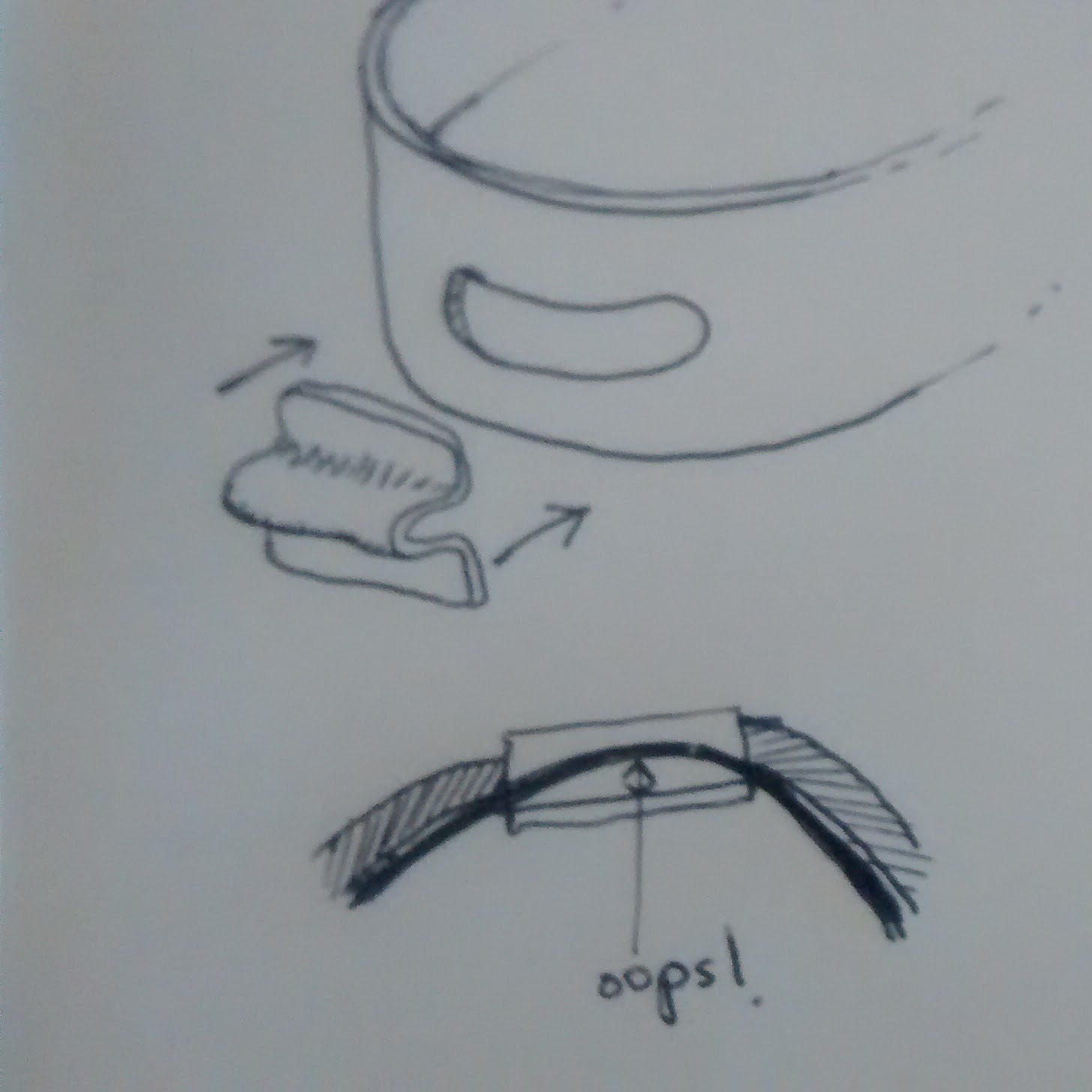
Hi … re laser focus, could cut the middles, form, then cut the edges, perhaps like the following genuine back-of-napkin sketch. The quite rigid drink bottles might be made of a good plastic, PETE X. Kind regards, Jonathan.
I like that. Heck, the “tabs” could be sliced off with a stanley knife and straight edge at that point.
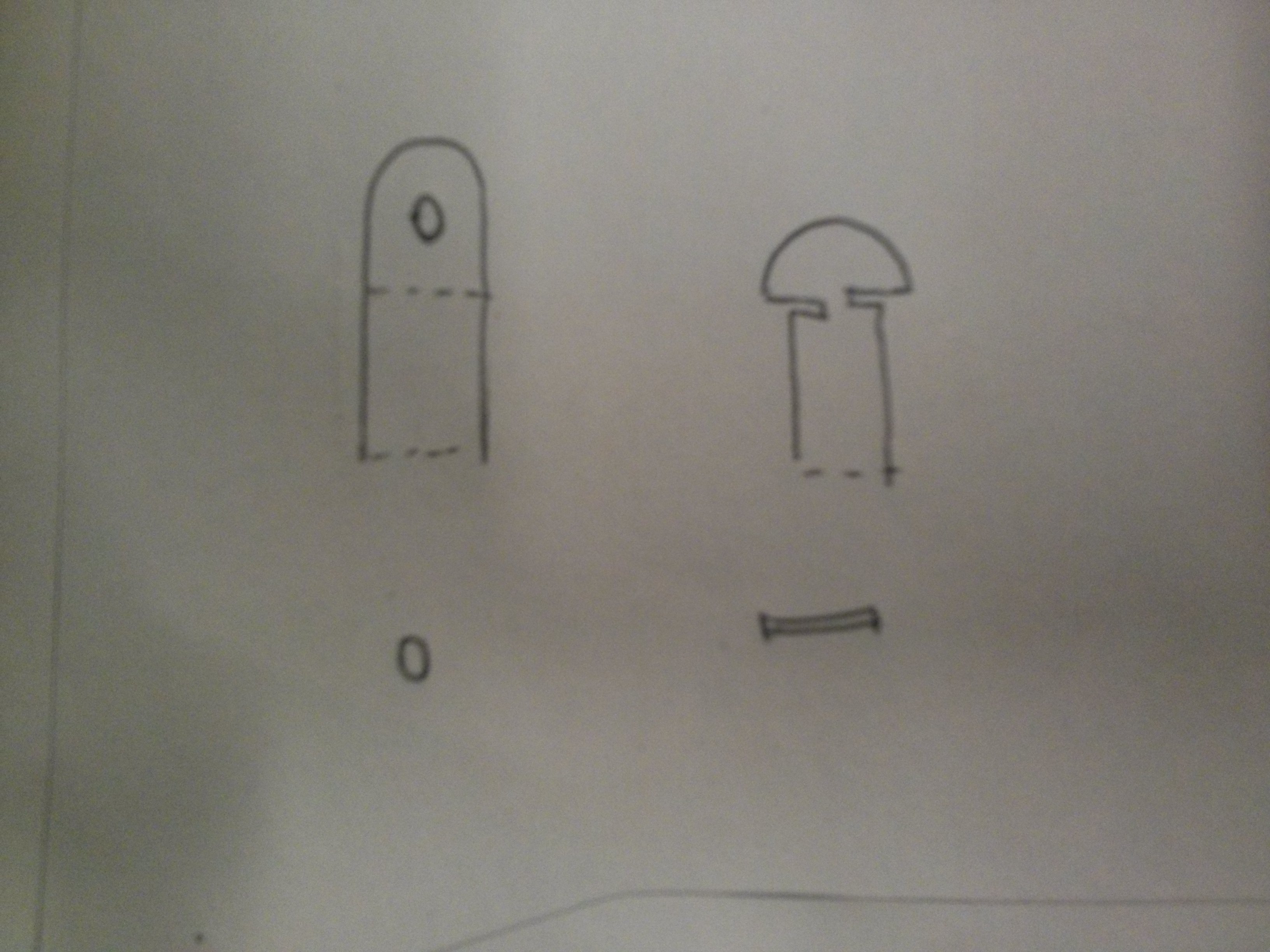
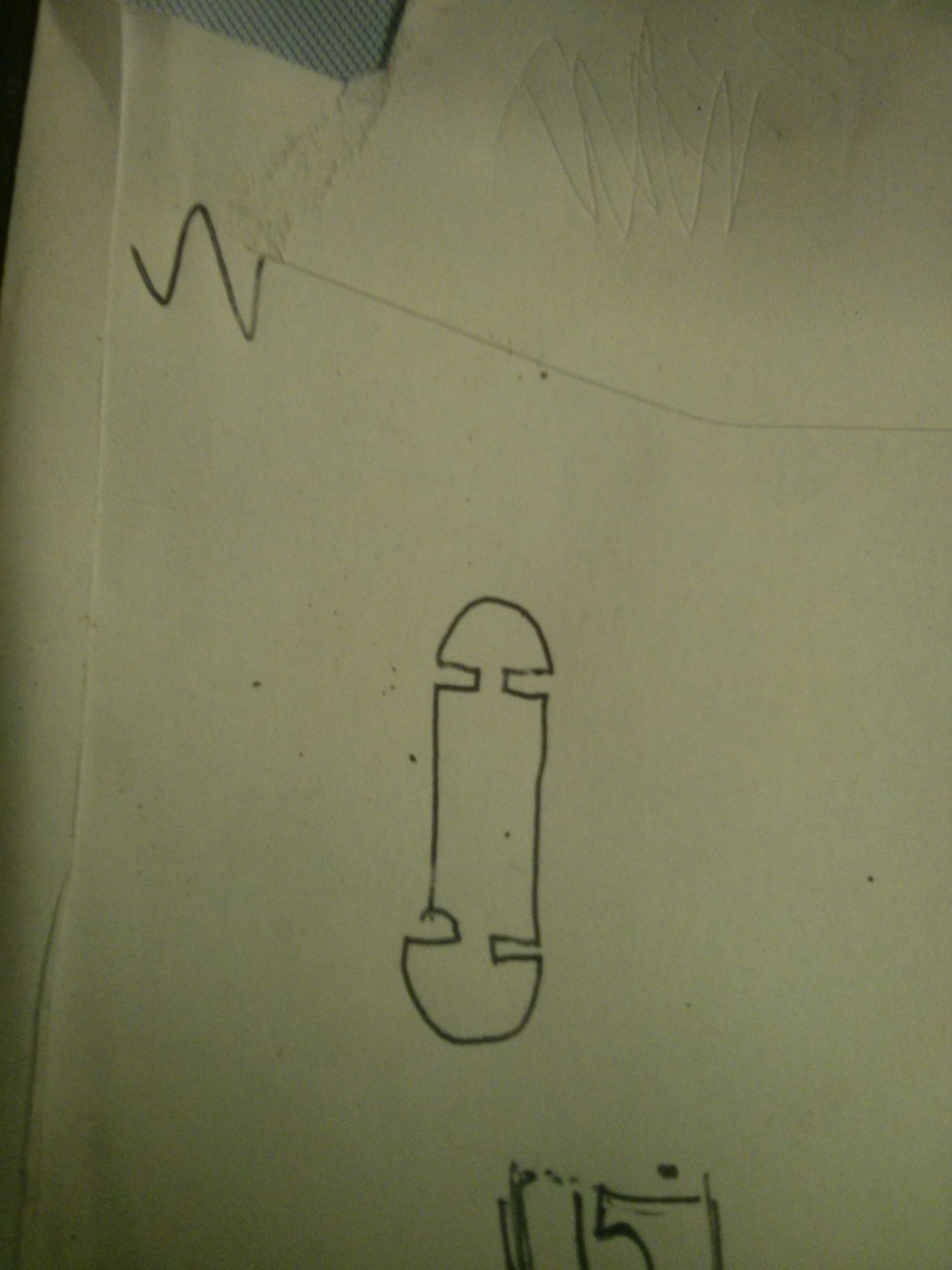
However, I’ve realised that this design has a flaw.
They’d have to be pretty short to avoid clashing with curvature of the main sheet, which might not give enough grip to hold everything firmly in place.
Wire hoops though a smaller slot might be a better bet.
Rejected!
My current thought is little loops of stiff wire
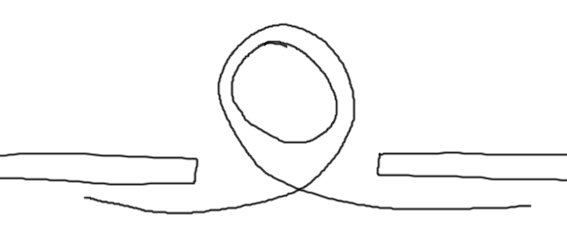
Which I could mass-produce on a jig. Loads of pegs around which the wire is looped and then you just cut each loop off with snips.
That makes me wonder: what about a continuous, low-pitch stitch? If your formers were made with holes at the correct places, pulling a thread through (that clear thin plastic fishing wire) wouldn’t be any more onerous, and would get you something much closer to a continuous fix.
Nice idea. Single point of failure with stitching though. Snap the wire and the whole lot unravels. Pull one of these loops through and the rest will hold it on just fine (and the errant loop won’t go anywhere, letting you tuck it back in place)
If you use kevlar thread it will be nearly impossible to break removing the single point of failure or reducing it so much Only cost under a fiver http://www.ebay.co.uk/itm/Kevlar-Tying-Thread-50-yard-spool-Veniards-/191897244609?var=&hash=item2cadf793c1:m:mBWSxd1gaFcnD5nPGM_KDfg